
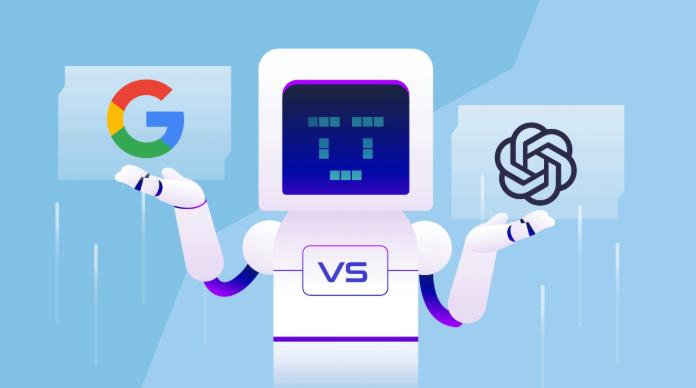

ChatGPT and Google Gemini represent the latest frontier in AI-powered personal assistants, each promising to redefine how we interact with technology daily. In a world increasingly reliant on digital tools for work, learning, creativity, and even entertainment, the race to create the most intuitive, responsive, and versatile AI assistant has never been more intense. The question that many users face today is simple yet crucial: which one deserves a spot on your device—ChatGPT or Google Gemini? Having spent months testing both platforms in various real-world scenarios, from professional productivity tasks to casual day-to-day use, the nuances between these two AI giants become clearer, offering a comprehensive perspective for potential users.
From the outset, ChatGPT has established itself as a household name in AI conversation. Developed by OpenAI, it boasts a sophisticated natural language processing engine capable of understanding context, nuance, and even emotional undertones in text. My personal experience with ChatGPT began in writing-intensive projects. As a freelance content creator, I found its ability to generate coherent, contextually relevant paragraphs almost uncanny. One striking example was when I needed to draft a technical article about renewable energy trends. Within minutes, ChatGPT produced a detailed, structured draft that required minimal editing. Beyond professional writing, I experimented with casual tasks like planning a weekend itinerary. ChatGPT seamlessly suggested local restaurants, nearby attractions, and even a schedule that maximized efficiency without making the day feel rushed. Its conversational style makes interactions feel surprisingly human, often anticipating follow-up questions and offering clarifications proactively, which reflects its strong contextual awareness.
Google Gemini, on the other hand, represents Google’s ambitious leap into integrating AI more holistically into everyday digital life. Unlike ChatGPT, which primarily exists as a conversational agent, Gemini’s design is rooted in multi-modal interaction, connecting with Google’s vast ecosystem of apps and services. During my tests, I noticed that Gemini excels in tasks requiring integration across multiple platforms. For instance, when I asked it to organize a week-long business trip, Gemini not only drafted a travel plan but synchronized flight options with Google Flights, hotel bookings with Google Maps, and meeting schedules directly with Google Calendar. This level of integration reduces the friction typically encountered when juggling multiple tools. In addition, Gemini’s AI demonstrates remarkable adaptability in understanding user preferences. After several interactions, it began suggesting travel options that better matched my style—choosing quieter hotels over bustling downtown options, and prioritizing direct flights where possible—showing a learning capability that feels personalized.
When evaluating their conversational abilities, the differences between the two AI assistants become more pronounced. ChatGPT’s strength lies in open-ended, creative dialogue. It can generate stories, write poems, or provide detailed explanations of complex topics in a manner that reads naturally. During a collaborative session for a marketing campaign, I prompted ChatGPT to draft a series of catchy social media posts around a new product launch. The suggestions were creative, engaging, and offered a variety of tones, from witty and humorous to formal and informative. Conversely, Google Gemini, while capable of handling creative prompts, tends to excel in factual accuracy and task completion. For example, when seeking technical guidance on optimizing an online ad campaign, Gemini provided structured, step-by-step advice, including links to relevant Google Ads resources, data analysis suggestions, and even potential performance metrics. In short, ChatGPT feels like a creative partner, while Gemini feels like an operational powerhouse.
Another dimension worth considering is AI reasoning and problem-solving. In testing ChatGPT with complex queries, such as generating hypothetical business strategies for a startup, it offered multiple approaches with pros and cons for each, displaying an impressive depth of reasoning. However, I noticed that while ChatGPT’s reasoning is broad, it occasionally leans on generalizations, especially in highly specialized domains. Google Gemini, by contrast, often delivers responses grounded in data-backed information. When asked to analyze historical stock trends and forecast potential outcomes, Gemini referenced verified financial data sources and presented calculations and charts in a way that felt more precise. In professional contexts, where accuracy can have tangible consequences, Gemini’s data integration offers a compelling advantage.
In terms of interface and accessibility, both apps present user-friendly designs but with distinct philosophies. ChatGPT maintains a minimalistic and conversational interface, which encourages exploration and experimentation without overwhelming the user. Its web and mobile applications focus heavily on dialogue, reducing clutter while offering advanced features like customizable tones and conversation memory. Google Gemini’s interface is visually richer and more feature-dense, reflecting its ambition to serve as a central hub for productivity. Gemini seamlessly embeds suggestions and interactive cards into its responses, allowing users to perform actions directly from the chat interface—such as sending emails, setting reminders, or navigating maps—without switching apps. While this increases efficiency, there is a slight learning curve, especially for users who prefer a more streamlined experience.
Privacy and data handling are another critical consideration. OpenAI’s ChatGPT provides users with transparent controls over their data usage, and its privacy policies emphasize non-retention of personal conversation content by default. In contrast, Google Gemini’s strength in ecosystem integration comes with an inherent dependence on Google’s broader data infrastructure. While this allows Gemini to deliver personalized, context-aware assistance, users must weigh the trade-off between convenience and the level of personal data shared across services. In my experience, for tasks that required sensitive handling, I tended to rely on ChatGPT to maintain a sense of separation from my broader digital footprint.
When it comes to creativity, spontaneity, and entertainment, ChatGPT continues to impress. I recall an evening when I asked it to help me craft a fictional short story for a social media campaign. It not only generated a compelling narrative but also suggested plot twists and character arcs, highlighting its creative versatility. Gemini, while competent in creative prompts, tends to default toward concise, factual responses. This distinction highlights a fundamental difference in design philosophy: ChatGPT emphasizes the experience of conversation itself, while Gemini emphasizes utility and actionable outputs.
From a performance standpoint, both platforms are remarkably fast and responsive, though nuances emerge in handling complex queries. ChatGPT can sometimes provide longer, more detailed responses that take a few extra seconds to process, reflecting its emphasis on depth and contextual richness. Gemini, optimized for integration and efficiency, delivers rapid, concise answers and often supplements responses with live data or links, which can be invaluable for users seeking quick actionable insights. This performance distinction also mirrors the user experience: ChatGPT encourages reflection and exploration, while Gemini encourages decisiveness and productivity.
The evolution of AI assistants also brings accessibility considerations. ChatGPT’s conversational style lowers the barrier for non-technical users, making advanced AI capabilities approachable without specialized knowledge. On the other hand, Gemini’s multi-modal design offers features like voice input, visual recognition, and contextual recommendations, broadening its usability in hands-free or on-the-go scenarios. Personally, I found Gemini particularly effective when managing tasks while commuting or traveling, leveraging voice commands to seamlessly interact with multiple services without interrupting the flow of my day.
Another dimension that emerged through extended use is adaptability in continuous learning. ChatGPT’s learning is primarily guided through user prompts and fine-tuning models, which makes it exceptionally versatile for varied conversational styles. Gemini, leveraging Google’s AI infrastructure, adapts based on user behavior across Google’s suite of apps. This means that the more you interact with Gemini, the more it can preemptively offer suggestions and optimize workflows in alignment with your habits. For users seeking a deeply personalized AI assistant embedded into their digital ecosystem, Gemini offers clear advantages, while ChatGPT provides a more flexible, platform-independent solution.
Cost and availability also influence the choice. ChatGPT offers free and subscription tiers, with premium versions unlocking advanced capabilities and faster response times. Google Gemini’s availability may vary depending on device compatibility and integration with Google Workspace services, which could limit access for some users. For budget-conscious users or those prioritizing platform independence, ChatGPT remains highly attractive. Conversely, for users deeply invested in Google’s ecosystem and willing to leverage the full suite of integrated services, Gemini provides a seamless, cohesive experience.
Considering actual user experiences highlights nuanced strengths and limitations. ChatGPT often excels in scenarios requiring in-depth discussion, creative brainstorming, and exploring multiple perspectives. It is a companion for reflective thinking, capable of generating novel ideas and facilitating learning. Google Gemini shines in task execution, operational guidance, and ecosystem integration. Its strength lies in enabling users to accomplish tasks efficiently, backed by real-time, data-driven insights. In my experience, alternating between the two based on the type of task maximizes productivity and satisfaction, suggesting that they are complementary rather than purely competitive.
Ultimately, choosing between ChatGPT and Google Gemini depends on the user’s priorities. If creativity, nuanced conversation, and exploratory dialogue are paramount, ChatGPT emerges as the preferred choice. Its ability to simulate human-like interaction, generate original content, and maintain conversational context is unmatched in most creative and professional domains. If integration, actionable insights, and workflow optimization are critical, Google Gemini offers a compelling alternative. Its multi-modal capabilities, deep integration with Google services, and data-backed reasoning make it a robust assistant for operational efficiency and practical problem-solving.
Reflecting on months of comparative use, it becomes clear that the distinction is not simply about which AI is “better” overall but about which aligns with the user’s specific needs. ChatGPT provides a versatile, human-centric conversational experience, while Google Gemini offers a data-driven, productivity-focused approach. Both have transformed how I approach daily tasks, from writing, planning, and brainstorming to scheduling, research, and multitasking. They are tools that, when understood and leveraged correctly, enhance cognitive capacity and creativity in ways previously unimaginable.
In conclusion, the choice between ChatGPT and Google Gemini is a decision between two philosophies of AI assistance. ChatGPT emphasizes conversation, creativity, and reflective engagement, offering users an experience that feels genuinely interactive and human. Google Gemini emphasizes integration, efficiency, and actionable intelligence, providing a level of operational support that seamlessly connects with the broader digital ecosystem. My recommendation for potential users is to assess personal and professional priorities: for those seeking imaginative exploration and versatile conversation, ChatGPT stands out; for those seeking task execution, real-time insights, and ecosystem integration, Google Gemini is the optimal choice. The evolution of AI assistants is not a competition to declare a definitive winner but an invitation to explore how these tools can complement and enhance daily life in ways that blend human intuition with artificial intelligence, making the modern digital experience richer, more efficient, and infinitely more engaging.